Performance
Recovery Rituals for Athletes
What serious athletes actually do between sessions, and why the recovery period is where adaptation happens.
Sōmavel Editorial10 min read
Training is a stimulus. Adaptation, the process of getting stronger, faster, more resilient, happens during recovery. This is not a motivational framing; it's basic exercise physiology. The training session creates the signal. Sleep, nutrition, and tissue work provide the conditions for the body to respond to that signal. Without adequate recovery, the body can't convert training stress into adaptation.
Most recreational athletes understand this intellectually and ignore it in practice. The training session is concrete and measurable. Recovery is diffuse and easy to defer. The athletes who train consistently for years without accumulating chronic injury are, almost without exception, the ones who take the diffuse stuff seriously.
What Recovery Actually Means Physiologically
During training, muscle fibers sustain micro-damage. Metabolic waste products accumulate. The nervous system depletes its resources. Connective tissue, including fascia, tendons, and ligaments, sustains mechanical stress that needs time to resolve.
Recovery is the process by which the body addresses each of these: clearing waste products through circulation, repairing damaged fibers (stronger than before), restoring nervous system resources, and remodeling connective tissue. Each process has a different timeline. Muscle soreness peaks at 24–48 hours and resolves in 72. Connective tissue remodeling takes longer, up to a week for significant stress.
Most athletes plan their training around how their muscles feel, without accounting for connective tissue. This is why overuse injuries often appear to come from nowhere. The muscles felt fine; it was the tendon that hadn't finished recovering.
Sleep Is the Foundation
Before discussing any recovery tool or protocol, the honest answer to "how do I recover better" is almost always: sleep more. Growth hormone, the primary signal for muscle repair, is released predominantly during slow-wave sleep. Cognitive recovery, which affects coordination and skill, requires REM. Inflammatory markers stay elevated in athletes who consistently sleep less than seven hours.
No rolling protocol compensates for six hours of sleep. If recovery is a priority, sleep hygiene comes first. That means consistent sleep and wake times, a cool room, no screens for 30 minutes before bed, and protecting sleep duration the way you protect training sessions.
Rolling as a Transition Ritual
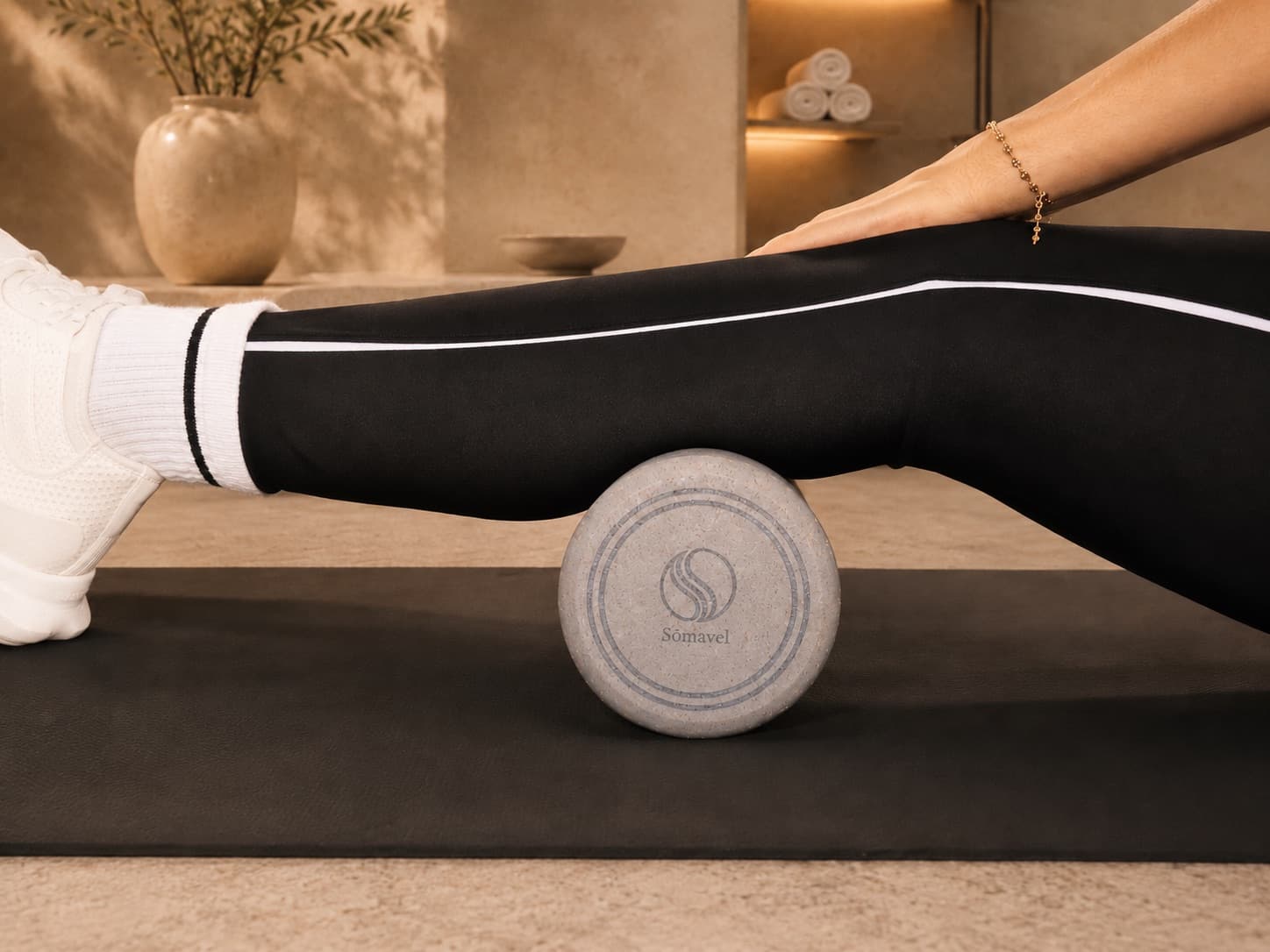
One of the most effective uses of a recovery roller isn't the rolling itself. It's what the rolling signals. A deliberate, focused 10-minute session after training functions as a transition ritual: a clear boundary between the sympathetic state of training (high cortisol, elevated heart rate, competitive mindset) and the parasympathetic state the body needs to recover.
Athletes who go directly from training to the rest of their day, showering and moving on, often carry physiological stress into the afternoon and evening. The nervous system doesn't switch modes automatically. A brief, intentional cooldown helps make that switch.
- The physical contact of rolling activates mechanoreceptors that communicate with the vagus nerve, which governs parasympathetic activation.
- Slow, controlled breathing during rolling directly activates the parasympathetic response.
- The routine itself, with the same sequence and same duration, creates a conditioned response over time. The body learns that this ritual means recovery can begin.
What Consistent Athletes Do Differently
Athletes who maintain high training volume over years without accumulating chronic injury tend to share a few characteristics:
- They treat easy days as genuinely easy. Not slightly less hard, but easy. The urge to push on recovery days is one of the most common patterns in overuse injury.
- They have specific, non-negotiable recovery practices. Not "I try to stretch" but "I roll for 10 minutes every evening and I don't skip it."
- They respond to early warning signals. Tightness that's been there for a week gets addressed, not tolerated until it becomes an injury.
- They separate training identity from recovery. The recovery session isn't a lesser version of training. It's a different kind of work, with different goals and different measures of success.
Building a Recovery Practice That Lasts
The most effective recovery practice is one you can maintain across years, not one that's optimal for a peak training block. This means it has to fit your actual schedule, require minimal setup, and produce results that are noticeable enough to reinforce the habit.
For most athletes, that means: prioritize sleep above everything, roll for 10 minutes after training and again in the evening before high-volume weeks, and treat persistent tightness as a signal to investigate rather than push through. That's it. The framework is simple. The execution is just a matter of protecting the time.
References
- Sleep and Athletic Performance: A Multidimensional Review of Physiological and Molecular Mechanisms (Journal of Clinical Medicine, 2025)
- Sleep and Muscle Recovery — Current Concepts and Empirical Evidence (Current Issues in Sport Science)
- A Systematic Review and Meta-Analysis of the Effects of Foam Rolling on Range of Motion, Recovery and Markers of Athletic Performance (Journal of Bodywork and Movement Therapies)
Written by

Sōmavel Editorial
Practitioners, movement specialists, and material researchers writing on the practice of recovery, and the materials and rituals that make it last.