Wellness
The Science of Self-Myofascial Release
What actually happens in your muscles when you roll, and why consistency matters more than pressure.
Sōmavel Editorial8 min read
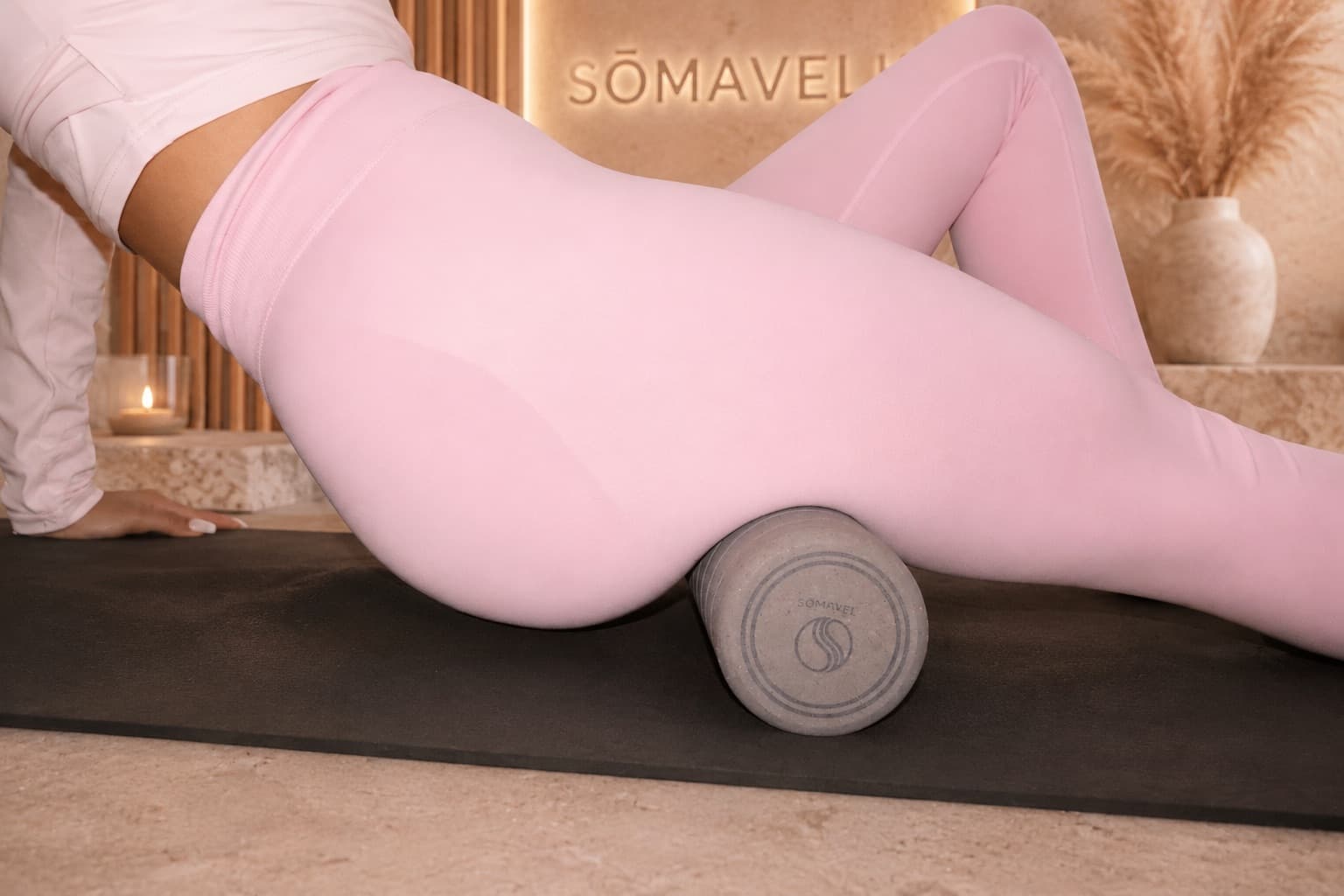
Most people who use a foam roller have only a rough idea of what it's actually doing. They know it hurts a little, and then it hurts less. That's accurate, but the mechanism underneath is more interesting, and understanding it changes how you approach the practice.
What Fascia Is, and Why It Tightens
Fascia is the connective tissue that wraps around every muscle, bone, nerve, and organ in your body. It's not a discrete layer. It's a continuous web. When everything is healthy, it slides freely. When you train hard, sit too long, or sustain an injury, it begins to adhere. Collagen fibers that are meant to glide start to stick together, forming restrictions that limit range of motion and create chronic tension.
These restrictions rarely stay local. A tight hip flexor can create a chain reaction that shows up as lower back pain or knee tracking problems. Fascia connects everything, so restrictions in one area pull on everything downstream.
What Rolling Actually Does
When you apply sustained pressure to fascial tissue, three things happen simultaneously:
- Mechanical deformation. The pressure physically separates adhered collagen fibers and encourages them to realign along the direction of force. This is where the term "myofascial release" comes from.
- Increased local circulation. Compressed tissue releases and blood rushes back in, delivering oxygen and clearing metabolic waste products like lactic acid that accumulate during training.
- Nervous system reset. Mechanoreceptors in the fascia signal the nervous system to reduce motor tone. The muscle relaxes not because you stretched it, but because the nervous system was given a reason to let go.
Pressure and Duration: What the Research Shows
The instinct is to use as much pressure as possible. If it hurts, it must be working. That's mostly wrong. Research consistently shows that sustained moderate pressure (around 6 out of 10 on a discomfort scale) held for 30–90 seconds produces better outcomes than aggressive, brief pressure.
The reason is a property called creep, the gradual, time-dependent lengthening of connective tissue under load. Fascia is viscoelastic, which means it responds differently to slow sustained force than it does to fast impact. You can't rush it. Staying on a tender spot and breathing through it is not weakness; it's correct technique.
Why Material Density Matters
The tool you use changes what's possible. A soft foam roller compresses under body weight before it can generate meaningful pressure on deeper fascial layers. A rigid plastic or PVC roller does the opposite. It applies so much force that the nervous system braces against it, which defeats the purpose entirely.
Natural cork sits in the exact range where the tissue can respond without guarding. Its density is consistent throughout. It doesn't have a hard core with a soft exterior, so the pressure you feel is the pressure you're actually getting. That reliability matters when you're trying to calibrate effort.
Consistency Over Intensity
The biggest variable in self-myofascial release is not how hard you press, but how often you show up. Fascial change is cumulative. A single aggressive session does far less than five minutes done daily for two weeks. The tissue responds to repeated mechanical input over time, not to occasional heroic effort.
This is why the tool needs to be something you'll actually use. If it's kept out of reach or takes time to set up, you won't be consistent. The practice only works if it becomes routine.
References
- Konrad et al. — Foam Rolling Training Effects on Range of Motion: A Systematic Review and Meta-Analysis (Sports Medicine, 2022)
- Effects of Self-Myofascial Release Using a Foam Roller on Range of Motion and Morphological Changes in Muscle (PubMed)
- A Systematic Review and Meta-Analysis of the Effects of Foam Rolling on Range of Motion, Recovery and Markers of Athletic Performance (Journal of Bodywork and Movement Therapies)
Written by

Sōmavel Editorial
Practitioners, movement specialists, and material researchers writing on the practice of recovery, and the materials and rituals that make it last.